
Category: Uncategorized
-

Beyond IAM Silos: Why the Identity Security Fabric is Essential for Securing AI and Non-Human Identities [email protected] (The Hacker News)
Identity security fabric (ISF) is a unified architectural framework that brings together disparate identity capabilities. Through ISF, identity governance and administration (IGA), access management (AM), privileged access management (PAM), and identity threat detection and response (ITDR) are all integrated into a single, cohesive control plane. Building on Gartner’s definition of “identityRead More
-

Seven npm Packages Use Adspect Cloaking to Trick Victims Into Crypto Scam Pages [email protected] (The Hacker News)
Cybersecurity researchers have discovered a set of seven npm packages published by a single threat actor that leverages a cloaking service called Adspect to differentiate between real victims and security researchers to ultimately redirect them to sketchy crypto-themed sites. The malicious npm packages, published by a threat actor named “dino_reborn” between September and November 2025,…
-

Microsoft Mitigates Record 5.72 Tbps DDoS Attack Driven by AISURU Botnet [email protected] (The Hacker News)
Microsoft on Monday disclosed that it automatically detected and neutralized a distributed denial-of-service (DDoS) attack targeting a single endpoint in Australia that measured 5.72 terabits per second (Tbps) and nearly 3.64 billion packets per second (pps). The tech giant said it was the largest DDoS attack ever observed in the cloud, and that it originated…
-

Google Issues Security Fix for Actively Exploited Chrome V8 Zero-Day Vulnerability [email protected] (The Hacker News)
Google on Monday released security updates for its Chrome browser to address two security flaws, including one that has come under active exploitation in the wild. The vulnerability in question is CVE-2025-13223 (CVSS score: 8.8), a type confusion vulnerability in the V8 JavaScript and WebAssembly engine that could be exploited to achieve arbitrary code execution…
-
What agentic AI means for cybersecurity
Agentic AI technology promises a more autonomous and proactive approach to protecting enterprise assets. But deploying tools that require less human intervention also carries risk.Read More
-
New EVALUSION ClickFix Campaign Delivers Amatera Stealer and NetSupport RAT [email protected] (The Hacker News)
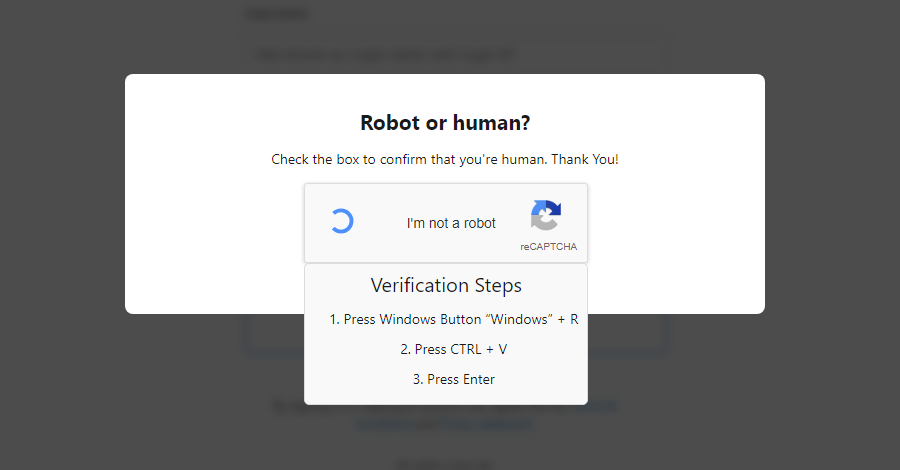
Cybersecurity researchers have discovered malware campaigns using the now-prevalent ClickFix social engineering tactic to deploy Amatera Stealer and NetSupport RAT. The activity, observed this month, is being tracked by eSentire under the moniker EVALUSION. First spotted in June 2025, Amatera is assessed to be an evolution of ACR (short for “AcridRain”) Stealer, which was available…
-

⚡ Weekly Recap: Fortinet Exploited, China’s AI Hacks, PhaaS Empire Falls & More [email protected] (The Hacker News)
This week showed just how fast things can go wrong when no one’s watching. Some attacks were silent and sneaky. Others used tools we trust every day — like AI, VPNs, or app stores — to cause damage without setting off alarms. It’s not just about hacking anymore. Criminals are building systems to make money,…
-

5 Reasons Why Attackers Are Phishing Over LinkedIn [email protected] (The Hacker News)
Phishing attacks are no longer confined to the email inbox, with 1 in 3 phishing attacks now taking place over non-email channels like social media, search engines, and messaging apps. LinkedIn in particular has become a hotbed for phishing attacks, and for good reason. Attackers are running sophisticated spear-phishing attacks against company executives, with recent…
-
Dragon Breath Uses RONINGLOADER to Disable Security Tools and Deploy Gh0st RAT [email protected] (The Hacker News)
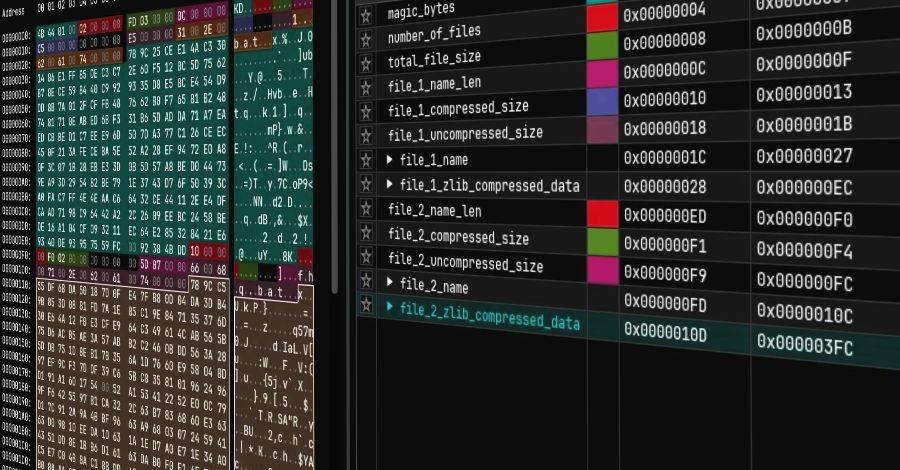
The threat actor known as Dragon Breath has been observed making use of a multi-stage loader codenamed RONINGLOADER to deliver a modified variant of a remote access trojan called Gh0st RAT. The campaign, which is primarily aimed at Chinese-speaking users, employs trojanized NSIS installers masquerading as legitimate like Google Chrome and Microsoft Teams, according to…
-

Rust Adoption Drives Android Memory Safety Bugs Below 20% for First Time [email protected] (The Hacker News)
Google has disclosed that the company’s continued adoption of the Rust programming language in Android has resulted in the number of memory safety vulnerabilities falling below 20% for the first time. “We adopted Rust for its security and are seeing a 1000x reduction in memory safety vulnerability density compared to Android’s C and C++ code.…