
Category: Uncategorized
-

Phishers Exploit Google Sites and DKIM Replay to Send Signed Emails, Steal Credentials [email protected] (The Hacker News)
In what has been described as an “extremely sophisticated phishing attack,” threat actors have leveraged an uncommon approach that allowed bogus emails to be sent via Google’s infrastructure and redirect message recipients to fraudulent sites that harvest their credentials. “The first thing to note is that this is a valid, signed email – it really…
-
The AI market does not understand AI safety
Responsible AI is often misunderstood as a way to make sure that a model is safe. However, AI safety examines whether harmful content is being produced or not.Read More
-

Microsoft Secures MSA Signing with Azure Confidential VMs Following Storm-0558 Breach [email protected] (The Hacker News)
Microsoft on Monday announced that it has moved the Microsoft Account (MSA) signing service to Azure confidential virtual machines (VMs) and that it’s also in the process of migrating the Entra ID signing service as well. The disclosure comes about seven months after the tech giant said it completed updates to Microsoft Entra ID and…
-

Lotus Panda Hacks SE Asian Governments With Browser Stealers and Sideloaded Malware [email protected] (The Hacker News)
The China-linked cyber espionage group tracked as Lotus Panda has been attributed to a campaign that compromised multiple organizations in an unnamed Southeast Asian country between August 2024 and February 2025. “Targets included a government ministry, an air traffic control organization, a telecoms operator, and a construction company,” the Symantec Threat Hunter Team said in…
-
Erlang/OTP RCE (CVE-2025-32433)
What is the Vulnerability? A critical SSH vulnerability has recently been identified in the Erlang/Open Telecom Platform (OTP). The vulnerability, tracked as CVE-2025-32433, has been assigned a CVSS score of 10.0. It is unauthenticated, remotely exploitable, and requires low complexity to execute.Erlang/OTP is commonly found in IoT devices and telecommunications platforms, and is prominently used…
-

Kimsuky Exploits BlueKeep RDP Vulnerability to Breach Systems in South Korea and Japan [email protected] (The Hacker News)
Cybersecurity researchers have flagged a new malicious campaign related to the North Korean state-sponsored threat actor known as Kimsuky that exploits a now-patched vulnerability impacting Microsoft Remote Desktop Services to gain initial access. The activity has been named Larva-24005 by the AhnLab Security Intelligence Center (ASEC). “In some systems, initial access was gained throughRead More
-
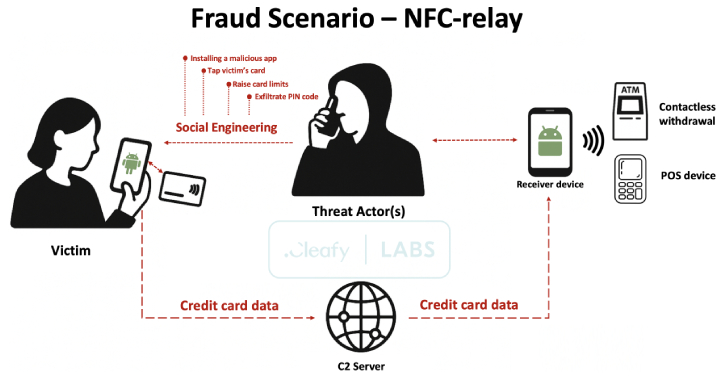
SuperCard X Android Malware Enables Contactless ATM and PoS Fraud via NFC Relay Attacks [email protected] (The Hacker News)
A new Android malware-as-a-service (MaaS) platform named SuperCard X can facilitate near-field communication (NFC) relay attacks, enabling cybercriminals to conduct fraudulent cashouts. The active campaign is targeting customers of banking institutions and card issuers in Italy with an aim to compromise payment card data, fraud prevention firm Cleafy said in an analysis. There is evidence…
-
What is a mobile VPN?
A mobile virtual private network (mobile VPN) is a type of VPN specifically designed to maintain a stable and secure connection while a user moves across different networks.Read More
-
5 Reasons Device Management Isn’t Device Trust [email protected] (The Hacker News)
The problem is simple: all breaches start with initial access, and initial access comes down to two primary attack vectors – credentials and devices. This is not news; every report you can find on the threat landscape depicts the same picture. The solution is more complex. For this article, we’ll focus on the device threat…
-

⚡ THN Weekly Recap: iOS Zero-Days, 4Chan Breach, NTLM Exploits, WhatsApp Spyware & More [email protected] (The Hacker News)
Can a harmless click really lead to a full-blown cyberattack? Surprisingly, yes — and that’s exactly what we saw in last week’s activity. Hackers are getting better at hiding inside everyday actions: opening a file, running a project, or logging in like normal. No loud alerts. No obvious red flags. Just quiet entry through small…