
Category: Uncategorized
-
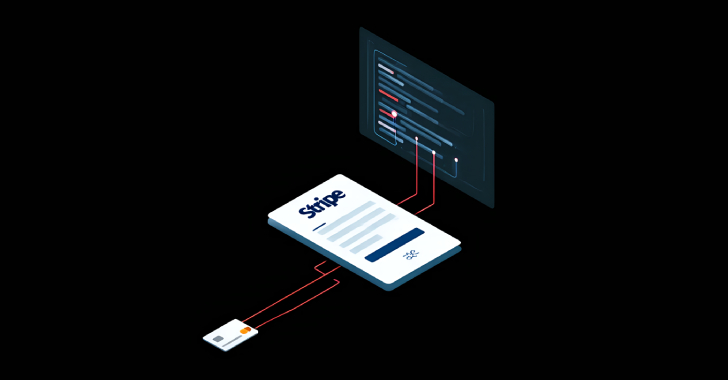
Legacy Stripe API Exploited to Validate Stolen Payment Cards in Web Skimmer Campaign [email protected] (The Hacker News)
Threat hunters are warning of a sophisticated web skimmer campaign that leverages a legacy application programming interface (API) from payment processor Stripe to validate stolen payment information prior to exfiltration. “This tactic ensures that only valid card data is sent to the attackers, making the operation more efficient and potentially harder to detect,” Jscrambler researchers…
-

Europol Dismantles Kidflix With 72,000 CSAM Videos Seized in Major Operation [email protected] (The Hacker News)
In one of the largest coordinated law enforcement operations, authorities have dismantled Kidflix, a streaming platform that offered child sexual abuse material (CSAM). “A total of 1.8 million users worldwide logged on to the platform between April 2022 and March 2025,” Europol said in a statement. “On March 11, 2025, the server, which contained around…
-
Model Context Protocol fever spreads in cloud-native world
The Anthropic-led spec for AI agent tool connections gains further momentum this week, with support from cloud-native infrastructure vendors such as Kubiya and Solo.io.Read More
-
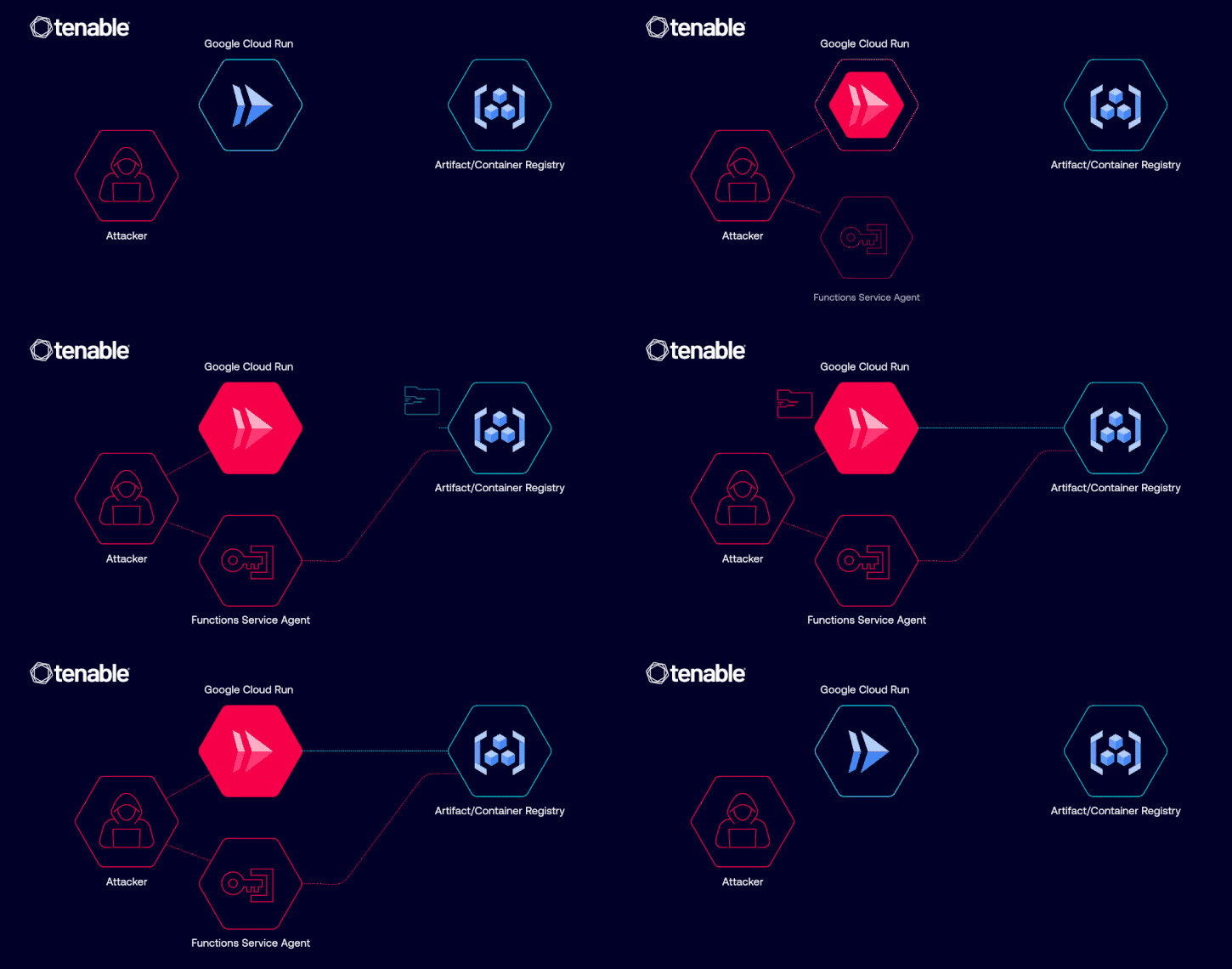
Google Fixed Cloud Run Vulnerability Allowing Unauthorized Image Access via IAM Misuse [email protected] (The Hacker News)
Cybersecurity researchers have disclosed details of a now-patched privilege escalation vulnerability in Google Cloud Platform (GCP) Cloud Run that could have allowed a malicious actor to access container images and even inject malicious code. “The vulnerability could have allowed such an identity to abuse its Google Cloud Run revision edit permissions in order to pull…
-
Helping Your Clients Achieve NIST Compliance: A Step by Step Guide for Service Providers [email protected] (The Hacker News)
Introduction As the cybersecurity landscape evolves, service providers play an increasingly vital role in safeguarding sensitive data and maintaining compliance with industry regulations. The National Institute of Standards and Technology (NIST) offers a comprehensive set of frameworks that provide a clear path to achieving robust cybersecurity practices. For service providers, adhering to NISTRead More
-

Outlaw Group Uses SSH Brute-Force to Deploy Cryptojacking Malware on Linux Servers [email protected] (The Hacker News)
Cybersecurity researchers have shed light on an “auto-propagating” cryptocurrency mining botnet called Outlaw (aka Dota) that’s known for targeting SSH servers with weak credentials. “Outlaw is a Linux malware that relies on SSH brute-force attacks, cryptocurrency mining, and worm-like propagation to infect and maintain control over systems,” Elastic Security Labs said in a new analysisRead…
-

How SSL Misconfigurations Impact Your Attack Surface [email protected] (The Hacker News)
When assessing an organization’s external attack surface, encryption-related issues (especially SSL misconfigurations) receive special attention. Why? Their widespread use, configuration complexity, and visibility to attackers as well as users make them more likely to be exploited. This highlights how important your SSL configurations are in maintaining your web application security andRead More
-
What is a uniform resource identifier (URI)?
A uniform resource identifier (URI) is a character sequence that identifies a logical (abstract) or physical resource — usually, but not always, connected to the internet.Read More
-

FIN7 Deploys Anubis Backdoor to Hijack Windows Systems via Compromised SharePoint Sites [email protected] (The Hacker News)
The financially motivated threat actor known as FIN7 has been linked to a Python-based backdoor called Anubis (not to be confused with an Android banking trojan of the same name) that can grant them remote access to compromised Windows systems. “This malware allows attackers to execute remote shell commands and other system operations, giving them…
-
New Malware Loaders Use Call Stack Spoofing, GitHub C2, and .NET Reactor for Stealth [email protected] (The Hacker News)
Cybersecurity researchers have discovered an updated version of a malware loader called Hijack Loader that implements new features to evade detection and establish persistence on compromised systems. “Hijack Loader released a new module that implements call stack spoofing to hide the origin of function calls (e.g., API and system calls),” Zscaler ThreatLabz researcher Muhammed Irfan…