Category: Uncategorized
-
5 leading enterprise password managers to consider
Admins need their password managers to provide a wide range of features and capabilities. Learn what every password manager must have, along with available options.Read More
-
Claude Mythos changes the AI security threat matrix
The Claude Mythos preview has raised alarms about AI-driven threats. Is this a new era for cybersecurity professionals?Read More
-

One Click, Total Shutdown: The “Patient Zero” Webinar on Killing Stealth Breaches [email protected] (The Hacker News)
The hardest part of cybersecurity isn’t the technology, it’s the people. Every major breach you’ve read about lately usually starts the same way: one employee, one clever email, and one “Patient Zero” infection. In 2026, hackers are using AI to make these “first clicks” nearly impossible to spot. If a single laptop gets compromised on…
-

PAN-OS RCE Exploit Under Active Use Enabling Root Access and Espionage [email protected] (The Hacker News)
Palo Alto Networks has disclosed that threat actors may have attempted to unsuccessfully exploit a recently disclosed critical security flaw as early as April 9, 2026. The vulnerability in question is CVE-2026-0300 (CVSS score: 9.3/8.7), a buffer overflow vulnerability in the User-ID Authentication Portal service of Palo Alto Networks PAN-OS software that could allow an…
-

ThreatsDay Bulletin: Edge Plaintext Passwords, ICS 0-Days, Patch-or-Die Alerts and 25+ New Stories [email protected] (The Hacker News)
Bad week. Turns out the easiest way to get hacked in 2026 is still the same old garbage: shady packages, fake apps, forgotten DNS junk, scam ads, and stolen logins getting dumped into Discord channels like it’s normal. Some of these attack chains don’t even feel sophisticated anymore. More like some tired guy with a…
-

Day Zero Readiness: The Operational Gaps That Break Incident Response [email protected] (The Hacker News)
Having an incident response retainer, or even a pre-approved external incident response firm, is not the same as being ready for an incident. A retainer means someone will answer the phone. Operational readiness determines whether that team can do meaningful work the moment they do. That distinction matters far more than many organizations realize. In…
-

PyPI Packages Deliver ZiChatBot Malware via Zulip APIs on Windows and Linux [email protected] (The Hacker News)
Cybersecurity researchers have discovered three packages on the Python Package Index (PyPI) repository that are designed to stealthily deliver a previously unknown malware family called ZiChatBot on Windows and Linux systems. “While these wheel packages do implement the features described on their PyPI web pages, their true purpose is to covertly deliver malicious files,” Kaspersky Read More
-

vm2 Node.js Library Vulnerabilities Enable Sandbox Escape and Arbitrary Code Execution [email protected] (The Hacker News)
A dozen critical security vulnerabilities have been disclosed in the vm2 Node.js library that could be exploited by bad actors to break out of the sandbox and execute arbitrary code on susceptible systems. vm2 is an open-source library used to run untrusted JavaScript code inside a secure sandbox by intercepting and proxying JavaScript objects to…
-
Mirai-Based xlabs_v1 Botnet Exploits ADB to Hijack IoT Devices for DDoS Attacks [email protected] (The Hacker News)
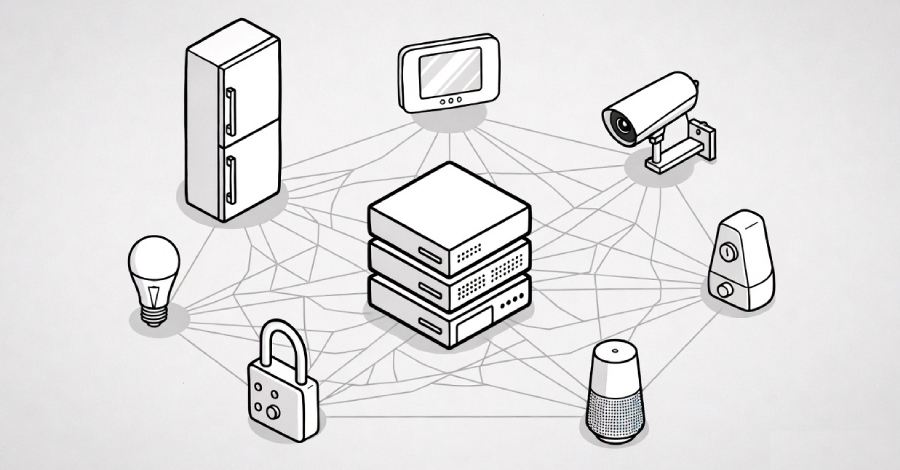
Cybersecurity researchers have exposed a new Mirai-derived botnet that self-identifies as xlabs_v1 and targets internet-exposed devices running Android Debug Bridge (ADB) to enlist them in a network capable of carrying out distributed denial-of-service (DDoS) attacks. Hunt.io, which detailed the malware, said it made the discovery after identifying an exposed directory on a Netherlands-hostedRead More
-

MuddyWater Uses Microsoft Teams to Steal Credentials in False Flag Ransomware Attack [email protected] (The Hacker News)
The Iranian state-sponsored hacking group known as MuddyWater (aka Mango Sandstorm, Seedworm, and Static Kitten) has been attributed to a ransomware attack in what has been described as a “false flag” operation. The attack, observed by Rapid7 in early 2026, has been found to leverage social engineering techniques via Microsoft Teams to initiate the infection…