Category: Uncategorized
-
New Chrome Vulnerability Let Malicious Extensions Escalate Privileges via Gemini Panel [email protected] (The Hacker News)
Cybersecurity researchers have disclosed details of a now-patched security flaw in Google Chrome that could have permitted attackers to escalate privileges and gain access to local files on the system. The vulnerability, tracked as CVE-2026-0628 (CVSS score: 8.8), has been described as a case of insufficient policy enforcement in the WebView tag. It was patched…
-
How to reduce false positive alerts and increase cybersecurity
False positives in cybersecurity detection tools drain resources and distract from real threats. Once CISOs understand the root causes of false positives, they can implement strategies to reduce them.Read More
-

Google Develops Merkle Tree Certificates to Enable Quantum-Resistant HTTPS in Chrome [email protected] (The Hacker News)
Google has announced a new program in its Chrome browser to ensure that HTTPS certificates are secure against the future risk posed by quantum computers. “To ensure the scalability and efficiency of the ecosystem, Chrome has no immediate plan to add traditional X.509 certificates containing post-quantum cryptography to the Chrome Root Store,” the Chrome Secure…
-
Top enterprise hybrid cloud management tools to review
The techniques used to build hybrid cloud architectures have come a long way, but managing these environments long term is plenty more complex without the right software.Read More
-

⚡ Weekly Recap: SD-WAN 0-Day, Critical CVEs, Telegram Probe, Smart TV Proxy SDK and More [email protected] (The Hacker News)
This week is not about one big event. It shows where things are moving. Network systems, cloud setups, AI tools, and common apps are all being pushed in different ways. Small gaps in access control, exposed keys, and normal features are being used as entry points. The pattern becomes clear only when you see everything…
-
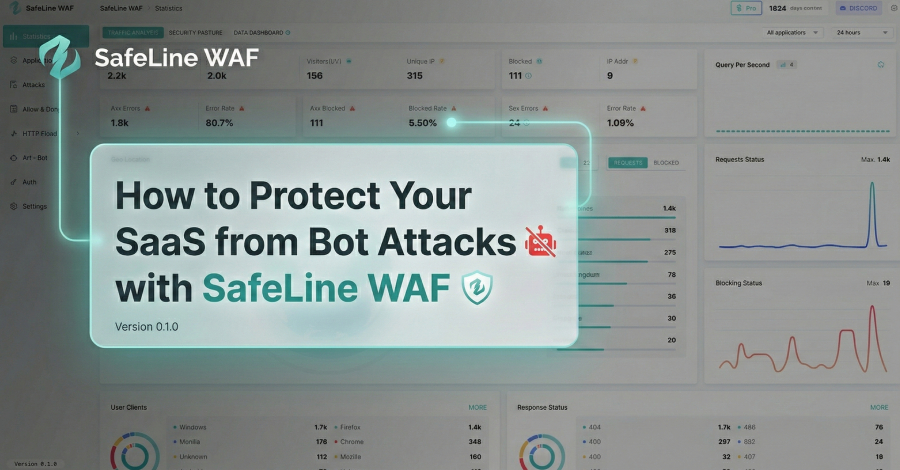
How to Protect Your SaaS from Bot Attacks with SafeLine WAF [email protected] (The Hacker News)
Most SaaS teams remember the day their user traffic started growing fast. Few notice the day bots started targeting them. On paper, everything looks great: more sign-ups, more sessions, more API calls. But in reality, something feels off: Sign-ups increase, but users aren’t activating. Server costs rise faster than revenue. Logs are filled with repeated…
-

APT28 Tied to CVE-2026-21513 MSHTML 0-Day Exploited Before Feb 2026 Patch Tuesday [email protected] (The Hacker News)
A recently disclosed security flaw patched by Microsoft may have been exploited by the Russia-linked state-sponsored threat actor known as APT28, according to new findings from Akamai. The vulnerability in question is CVE-2026-21513 (CVSS score: 8.8), a high-severity security feature bypass affecting the MSHTML Framework. “Protection mechanism failure in MSHTML Framework allows an unauthorizedRead More
-

North Korean Hackers Publish 26 npm Packages Hiding Pastebin C2 for Cross-Platform RAT [email protected] (The Hacker News)
Cybersecurity researchers have disclosed a new iteration of the ongoing Contagious Interview campaign, where the North Korean threat actors have published a set of 26 malicious packages to the npm registry. The packages masquerade as developer tools, but contain functionality to extract the actual command-and-control (C2) by using seemingly harmless Pastebin content as a dead…
-
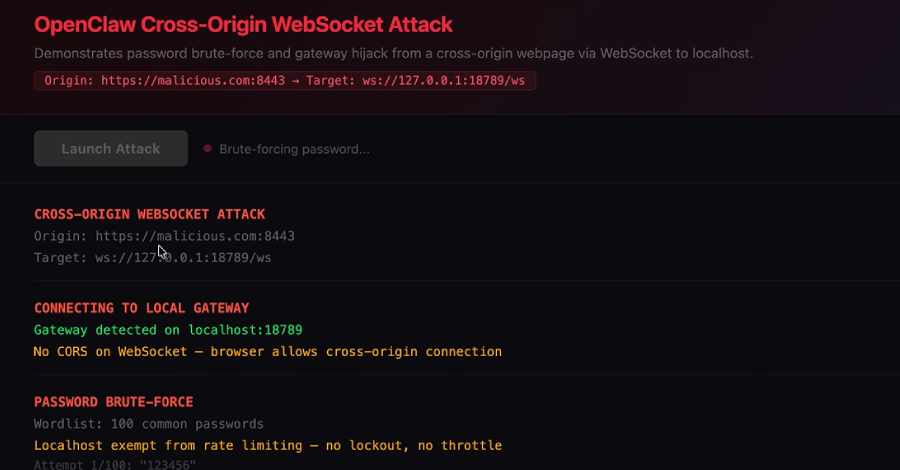
ClawJacked Flaw Lets Malicious Sites Hijack Local OpenClaw AI Agents via WebSocket [email protected] (The Hacker News)
OpenClaw has fixed a high-severity security issue that, if successfully exploited, could have allowed a malicious website to connect to a locally running artificial intelligence (AI) agent and take over control. “Our vulnerability lives in the core system itself – no plugins, no marketplace, no user-installed extensions – just the bare OpenClaw gateway, running exactly…
-

Thousands of Public Google Cloud API Keys Exposed with Gemini Access After API Enablement [email protected] (The Hacker News)
New research has found that Google Cloud API keys, typically designated as project identifiers for billing purposes, could be abused to authenticate to sensitive Gemini endpoints and access private data. The findings come from Truffle Security, which discovered nearly 3,000 Google API keys (identified by the prefix “AIza”) embedded in client-side code to provide Google-related…