
“Cyber warfare is as much about psychological strategy as technical prowess.”
― James Scott
-

U.S. Prosecutors Indict Cybersecurity Insiders Accused of BlackCat Ransomware Attacks [email protected] (The Hacker News)
Federal prosecutors in the U.S. have accused a trio of allegedly hacking the networks of five U.S. companies with BlackCat (aka ALPHV) ransomware between May and November 2023 and extorting them. Ryan Clifford Goldberg, Kevin Tyler Martin, and an unnamed co–conspirator (aka “Co-Conspirator 1”) based in Florida, all U.S. nationals, are said to have used…
-

Microsoft Detects “SesameOp” Backdoor Using OpenAI’s API as a Stealth Command Channel [email protected] (The Hacker News)
Microsoft has disclosed details of a novel backdoor dubbed SesameOp that uses OpenAI Assistants Application Programming Interface (API) for command-and-control (C2) communications. “Instead of relying on more traditional methods, the threat actor behind this backdoor abuses OpenAI as a C2 channel as a way to stealthily communicate and orchestrate malicious activities within the compromisedRead More
-
Microsoft Windows Server Update Service Remote Code Execution Vulnerability
What is the Vulnerability? CVE-2025-59287 is a critical unauthenticated remote code execution (RCE) vulnerability affecting Windows Server Update Services (WSUS). The flaw stems from unsafe deserialization of untrusted data, allowing attackers to execute arbitrary code on vulnerable servers without authentication. A public proof-of-concept exploit has been released, and CISA has added the vulnerability to its…
-
To maximize their influence, CISOs need diverse skills
In many organizations today, when the CISO talks, the CEO and board listen. CISOs who successfully rise to the occasion have broad skillsets.Read More
-
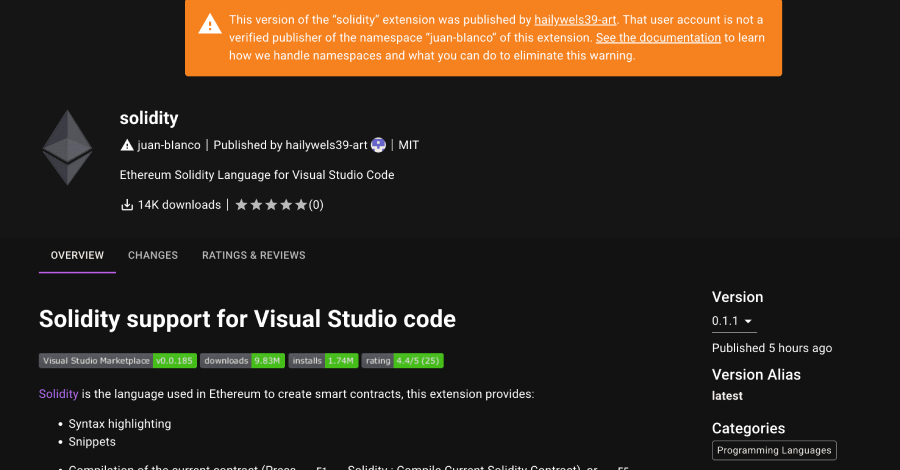
Malicious VSX Extension “SleepyDuck” Uses Ethereum to Keep Its Command Server Alive [email protected] (The Hacker News)
Cybersecurity researchers have flagged a new malicious extension in the Open VSX registry that harbors a remote access trojan called SleepyDuck. According to Secure Annex’s John Tuckner, the extension in question, juan-bianco.solidity-vlang (version 0.0.7), was first published on October 31, 2025, as a completely benign library that was subsequently updated to version 0.0.8 on November…
-
Browser detection and response fills gaps in security programs
BDR is the latest tool to address detection and response as more and more communication occurs over Edge, Chrome and their counterparts. But does your organization really need it?Read More
-

Cybercriminals Exploit Remote Monitoring Tools to Infiltrate Logistics and Freight Networks [email protected] (The Hacker News)
Bad actors are increasingly training their sights on trucking and logistics companies with an aim to infect them with remote monitoring and management (RMM) software for financial gain and ultimately steal cargo freight. The threat cluster, believed to be active since at least June 2025 according to Proofpoint, is said to be collaborating with organized…
-

⚡ Weekly Recap: Lazarus Hits Web3, Intel/AMD TEEs Cracked, Dark Web Leak Tool & More [email protected] (The Hacker News)
Cyberattacks are getting smarter and harder to stop. This week, hackers used sneaky tools, tricked trusted systems, and quickly took advantage of new security problems—some just hours after being found. No system was fully safe. From spying and fake job scams to strong ransomware and tricky phishing, the attacks came from all sides. Even encrypted…
-
The Evolution of SOC Operations: How Continuous Exposure Management Transforms Security Operations [email protected] (The Hacker News)
Security Operations Centers (SOC) today are overwhelmed. Analysts handle thousands of alerts every day, spending much time chasing false positives and adjusting detection rules reactively. SOCs often lack the environmental context and relevant threat intelligence needed to quickly verify which alerts are truly malicious. As a result, analysts spend excessive time manually triaging alerts, theRead…
-

Researchers Uncover BankBot-YNRK and DeliveryRAT Android Trojans Stealing Financial Data [email protected] (The Hacker News)
Cybersecurity researchers have shed light on two different Android trojans called BankBot-YNRK and DeliveryRAT that are capable of harvesting sensitive data from compromised devices. According to CYFIRMA, which analyzed three different samples of BankBot-YNRK, the malware incorporates features to sidestep analysis efforts by first checking its running within a virtualized or emulated environmentRead More
“Security used to be an inconvenience sometimes, but now it’s a necessity all the time.”
― Martina Navratilova