“Cyber warfare is as much about psychological strategy as technical prowess.”
― James Scott
-
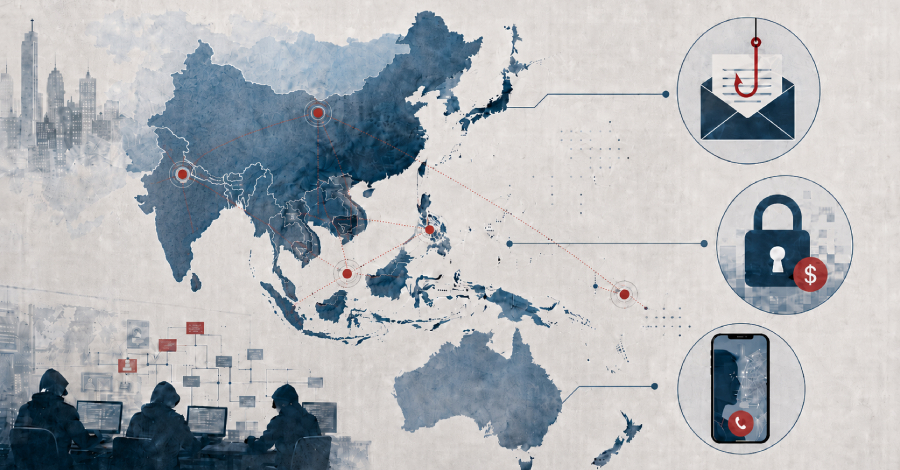
INTERPOL Warns Phishing, Ransomware, and AI Scams Are Rising Across Asia-Pacific [email protected] (The Hacker News)
A new report from INTERPOL has revealed a “dramatic increase” in cybercrime in Asia and the South Pacific, fueled by rapid digitalization, internet penetration, new technologies, organized criminal networks, and a disparity in cybersecurity maturity. According to INTERPOL’s 2025/2026 Asia and South Pacific Cyberthreat Assessment Report, phishing has emerged as the most widespread andRead More
-

Hackers Exploit Gravity SMTP WordPress Plugin Bug to Expose API Keys [email protected] (The Hacker News)
Threat actors are exploiting a recently patched security flaw impacting Gravity SMTP, a WordPress plugin that’s installed on about 100,000 sites. The vulnerability, tracked as CVE-2026-4020 (CVSS score: 5.3), is a medium-severity information disclosure flaw that can allow unauthenticated attackers to extract sensitive data, such as configuration data, API keys, secrets, and OAuth tokensRead More
-

Unpatchable ‘usbliter8’ Exploit Breaks Apple A12 and A13 SecureROM Boot Chain [email protected] (The Hacker News)
Security researchers at Paradigm Shift have published a working exploit, dubbed usbliter8, that achieves arbitrary code execution inside the SecureROM of Apple’s A12 and A13 chips. That code is burned into the silicon at manufacture. No software update can reach it. Affected devices will carry this flaw for as long as they stay in use. This is not…
-
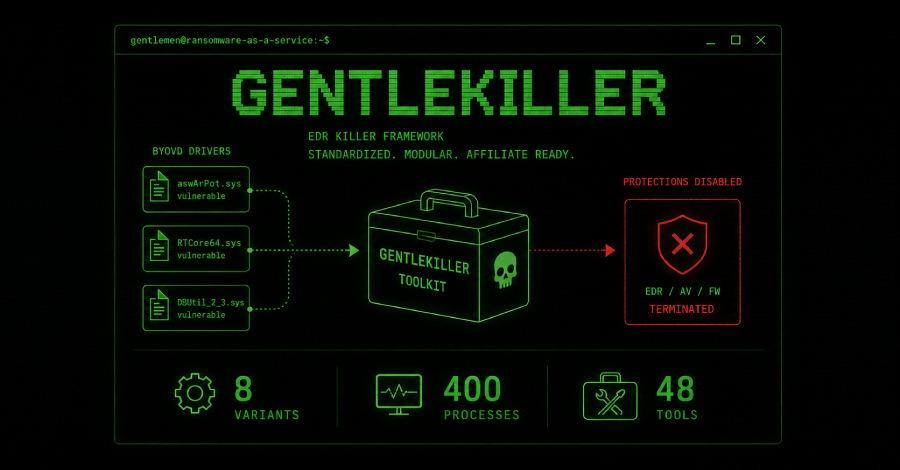
The Gentlemen RaaS Uses GentleKiller EDR Framework Targeting 400 Security Processes [email protected] (The Hacker News)
The Gentlemen ransomware-as-a-service (RaaS) operation is actively developing and maintaining a suite of endpoint detection and response (EDR) killers that it hands out to affiliates for impairing system defenses before deploying the encryptor. This mature portfolio of EDR-terminating tools is centered around a framework that’s known as GentleKiller. “They also incorporate third-party orRead More
-
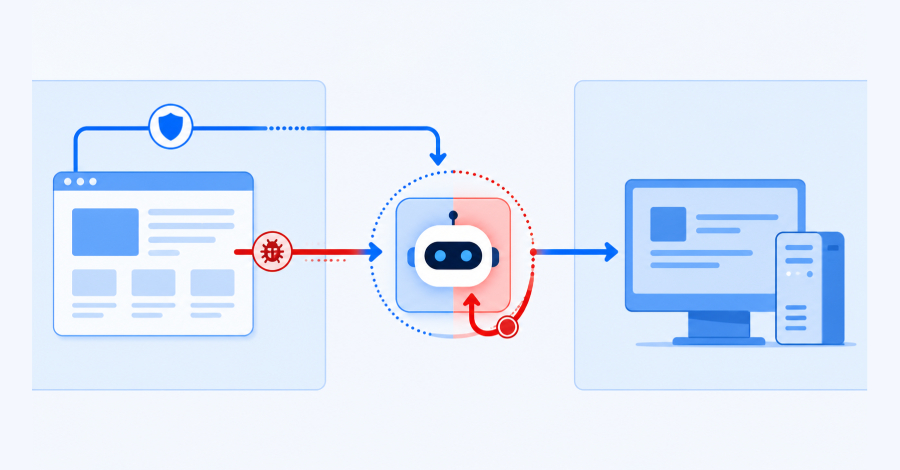
AutoJack Attack Lets One Web Page Hijack AI Agent for Host Code Execution [email protected] (The Hacker News)
Microsoft researchers have detailed an exploit chain, named AutoJack, that turns an AI browsing agent into a delivery vehicle for remote code execution. Steer the agent to load an attacker’s web page, and that page’s JavaScript can reach a privileged local service on the same machine and spawn a process on the host. No credentials, no…
-

Operation Endgame Disrupts SocGholish Servers, Cleans 14,971 WordPress Sites [email protected] (The Hacker News)
Dutch law enforcement authorities, along with counterparts from Canada , Germany, and the U.S., have disrupted malicious infrastructure associated with SocGholish and cleaned up nearly 15,000 infected WordPress websites. “With these actions we deprive cybercriminals of access to infected computer systems,” Maikel Rollman of the Netherlands National High Tech Crime Unit said. “This preventsRead More
-

CISA Warns Fortinet Customers as FortiBleed Hits 86,644 FortiGate Devices [email protected] (The Hacker News)
The U.S. Cybersecurity and Infrastructure Security Agency (CISA) on Thursday urged Fortinet customers with FortiGate appliances to take steps to secure against ongoing malicious activity aimed at thousands of internet-accessible devices. The sweeping campaign, believed to be the work of Russian-speaking threat actors, has been codenamed FortiBleed. The number of compromised devices stands atRead More
-
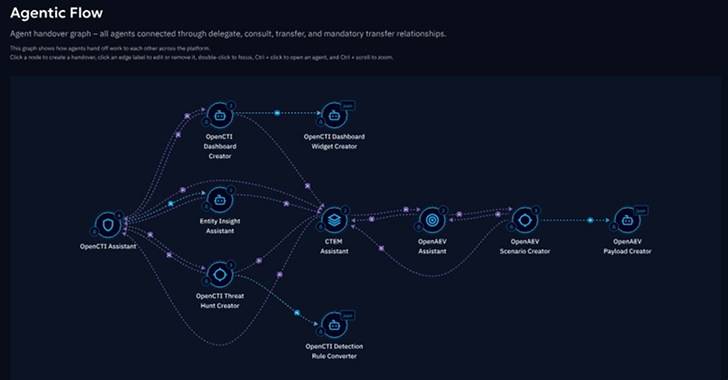
From Assistive to Agentic: The AI Shift That’s Redefining Threat Management [email protected] (The Hacker News)
Introduction The average enterprise security team has 40 or more security tools, giving a lot of visibility into internal telemetry and asset data. But often, these tools are working in siloes, generating (overlapping) alerts and data. And yet, breach dwell times remain stubbornly long (~43 days), response windows keep closing before teams can act, and…
-
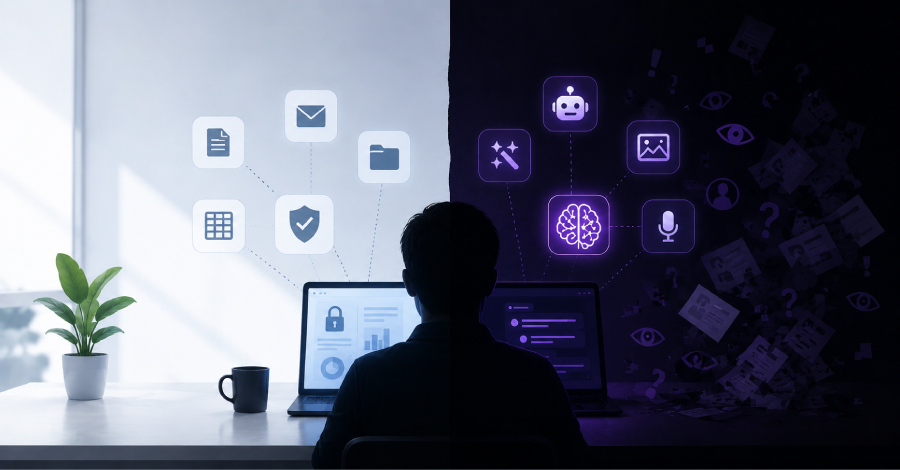
Forget Data Leakage: Shadow AI’s Real Threat Is Access Control [email protected] (The Hacker News)
The first wave of enterprise AI concern was straightforward. It was simply employees pasting sensitive data into public AI tools. Security teams responded with usage policies, domain blocks, and data loss prevention rules. That response made sense at the time. It doesn’t fit the problem anymore. Shadow AI has shifted from a data leakage concern…
-
Salesforce Disables Klue App Integration After OAuth Token Abuse Exposes Customer Data [email protected] (The Hacker News)
Salesforce has revealed that it disabled the Klue Battlecards app integration within its platform in response to a security incident impacting the competitive intelligence company on June 11, 2026. To that end, organizations will be unable to connect to Salesforce via the app until further notice, the American cloud-based software company noted in an alert…
“Security used to be an inconvenience sometimes, but now it’s a necessity all the time.”
― Martina Navratilova