
“Cyber warfare is as much about psychological strategy as technical prowess.”
― James Scott
-
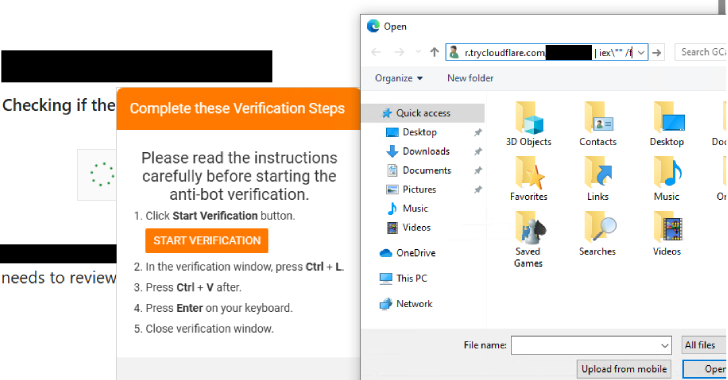
New PHP-Based Interlock RAT Variant Uses FileFix Delivery Mechanism to Target Multiple Industries [email protected] (The Hacker News)
Threat actors behind the Interlock ransomware group have unleashed a new PHP variant of its bespoke remote access trojan (RAT) as part of a widespread campaign using a variant of ClickFix called FileFix. “Since May 2025, activity related to the Interlock RAT has been observed in connection with the LandUpdate808 (aka KongTuke) web-inject threat clusters,”…
-

⚡ Weekly Recap: Scattered Spider Arrests, Car Exploits, macOS Malware, Fortinet RCE and More [email protected] (The Hacker News)
In cybersecurity, precision matters—and there’s little room for error. A small mistake, missed setting, or quiet misconfiguration can quickly lead to much bigger problems. The signs we’re seeing this week highlight deeper issues behind what might look like routine incidents: outdated tools, slow response to risks, and the ongoing gap between compliance and real security.…
-
How CISOs can prepare for the quantum cybersecurity threat
CISOs should begin preparing now for quantum computing’s impact on cybersecurity. Start with assessments and planning before migrating to post-quantum cryptography standards.Read More
-
Prompt injection attacks: From pranks to security threats
Prompt injection attacks manipulate AI systems to bypass security guardrails, enabling data theft and code execution — yet they lack comprehensive defenses and CVE tracking.Read More
-

CBI Shuts Down £390K U.K. Tech Support Scam, Arrests Key Operatives in Noida Call Center [email protected] (The Hacker News)
India’s Central Bureau of Investigation (CBI) has announced that it has taken steps to dismantle what it said was a transnational cybercrime syndicate that carried out “sophisticated” tech support scams targeting citizens of Australia and the United Kingdom. The fraudulent scheme is estimated to have led to losses worth more than £390,000 ($525,000) in the…
-

eSIM Vulnerability in Kigen’s eUICC Cards Exposes Billions of IoT Devices to Malicious Attacks [email protected] (The Hacker News)
Cybersecurity researchers have discovered a new hacking technique that exploits weaknesses in the eSIM technology used in modern smartphones, exposing users to severe risks. The issues impact the Kigen eUICC card. According to the Irish company’s website, more than two billion SIMs in IoT devices have been enabled as of December 2020. The findings come…
-

GPUHammer: New RowHammer Attack Variant Degrades AI Models on NVIDIA GPUs [email protected] (The Hacker News)
NVIDIA is urging customers to enable System-level Error Correction Codes (ECC) as a defense against a variant of a RowHammer attack demonstrated against its graphics processing units (GPUs). “Risk of successful exploitation from RowHammer attacks varies based on DRAM device, platform, design specification, and system settings,” the GPU maker said in an advisory released this…
-
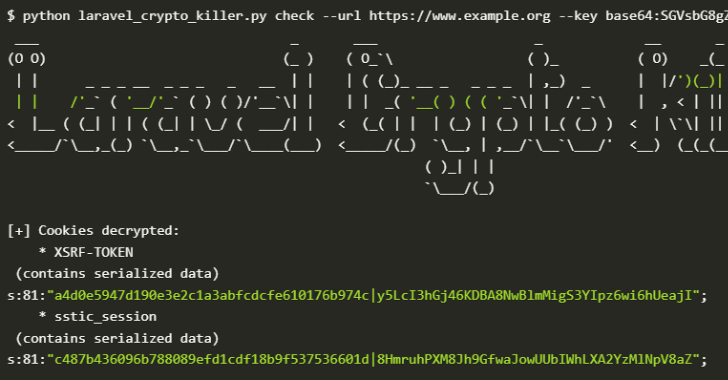
Over 600 Laravel Apps Exposed to Remote Code Execution Due to Leaked APP_KEYs on GitHub [email protected] (The Hacker News)
Cybersecurity researchers have discovered a serious security issue that allows leaked Laravel APP_KEYs to be weaponized to gain remote code execution capabilities on hundreds of applications. “Laravel’s APP_KEY, essential for encrypting sensitive data, is often leaked publicly (e.g., on GitHub),” GitGuardian said. “If attackers get access to this key, they can exploit a deserialization flaw…
-
Next.js Middleware Auth.Bypass Vulnerability
What is the Vulnerability?FortiGuard Labs has identified ongoing attack attempts targeting a critical authorization bypass vulnerability (CVE-2025-29927) in the middleware system of the Next.js framework, a popular React-based framework for building full-stack web applications.The issue arises from improper handling of an internal HTTP header: x-middleware-subrequest. This header, when manipulated, can bypass middleware execution, allowing attackers…
-

Fortinet Releases Patch for Critical SQL Injection Flaw in FortiWeb (CVE-2025-25257) [email protected] (The Hacker News)
Fortinet has released fixes for a critical security flaw impacting FortiWeb that could enable an unauthenticated attacker to run arbitrary database commands on susceptible instances. Tracked as CVE-2025-25257, the vulnerability carries a CVSS score of 9.6 out of a maximum of 10.0. “An improper neutralization of special elements used in an SQL command (‘SQL Injection’)…
“Security used to be an inconvenience sometimes, but now it’s a necessity all the time.”
― Martina Navratilova