
“Cyber warfare is as much about psychological strategy as technical prowess.”
― James Scott
-
New GreatXML Exploit Bypasses Windows BitLocker via Recovery Partition XML Files [email protected] (The Hacker News)
Security researcher Chaotic Eclipse (aka Nightmare-Eclipse and MSNightmare) has released a new Windows BitLocker bypass dubbed GreatXML, a day after they published an exploit for Microsoft Defender. “This was an accidental discovery, it took a total of 4 hours to find this,” the researcher said in a post on Blogger. “If you ever attempted to…
-
The Gentlemen Ransomware Claims 478 Victims, Can Spread Like a Worm [email protected] (The Hacker News)
A new analysis of The Gentlemen operation has revealed that the financially motivated threat group initially operated as an affiliate responsible for conducting double extortion attacks, while leveraging resources from various ransomware-as-a-service (RaaS) schemes like LockBit (aka Tenacious Mantis), Qilin (aka Pestilent Mantis), and Medusa (aka Venomous Mantis). According to a detailed reportRead More
-
How to build AI security guardrails without blocking innovation
To take advantage of opportunities AI might present — without opening the door to a breach — an organization needs to put the right guardrails in the right places.Read More
-
The prosecution gap: Why cybercrimes go unpunished
Are cybersecurity criminals simply acting with impunity? It sometimes feels like it. Learn what defenders need to know and what investigators are doing about it.Read More
-
Cybersecurity Stars Awards 2026: Winners Announced Across 95 Categories [email protected] (The Hacker News)
Most good security work is invisible by design. Today is the exception. The 2026 Cybersecurity Stars Awards winners are announced across 95 subcategories in four main award categories. The reason is simple. Cybersecurity is full of work that deserves recognition and rarely gets it. Products that quietly close real gaps. Teams that stop incidents nobody…
-
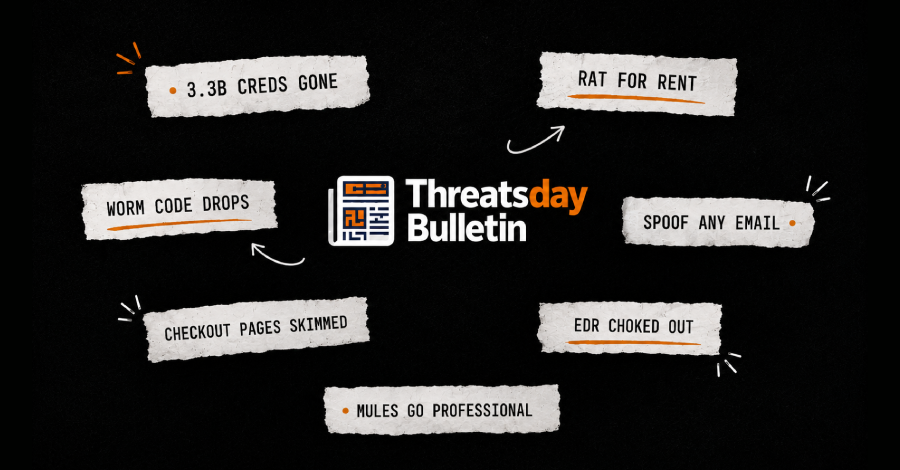
ThreatsDay Bulletin: Worm Code Leaked, AI Agent Phished, Claude Action Patch + 28 New Stories [email protected] (The Hacker News)
It’s been one of those weeks. You expect the usual noise: recycled malware, sloppy attacks, another easy target getting hit. Instead, there’s a supply chain attack kit in a public repo, a $5,000-a-month RAT that clones browsers, and research showing AI agents can be tricked into leaking real credentials. The bigger problem is how polished…
-

AI Broke Vulnerability Management. That’s Why CISOs Are Moving Budget to BAS. [email protected] (The Hacker News)
For thirty years, vulnerability management ran on a buffer: the months between when a vulnerability was found and when someone could figure out how to weaponize it. The solution was straightforward enough; triage by severity, schedule the fix, validate, and move on. The buffer was what made that work. Today, that buffer is gone. AI…
-

OceanLotus Hits Vietnam Investors With SPECTRALVIPER in FireAnt Attack [email protected] (The Hacker News)
The Vietnam-aligned threat actor known as OceanLotus has been attributed to two distinct campaigns that targeted domestic entities and stock investors with a backdoor known as SPECTRALVIPER. The campaigns involve a prolonged cyber espionage operation aimed at a Vietnamese infrastructure and transport construction corporation between mid-2024 and February 2026, as well as a supply chain…
-
GitHub to Disable npm Install Scripts by Default to Stop Supply Chain Attacks [email protected] (The Hacker News)
GitHub has announced what it said are “breaking changes” coming to npm version 12, one of which turns off install scripts by default to combat software supply chain threats. The changes aim to combat attack techniques that abuse the “npm install” command to trigger the execution of malicious code using npm lifecycle hooks. “Npm install”…
-
Check Point VPN Authentication Bypass Vulnerability
What is the Vulnerability? A critical authentication bypass vulnerability, CVE-2026-50751 (CVSS 9.3), is being actively exploited against vulnerable Check Point Remote Access VPN and Mobile Access deployments configured to use the deprecated IKEv1 key exchange protocol. The flaw allows unauthenticated attackers to bypass user authentication through a certificate validation logic weakness and establish a VPN…
“Security used to be an inconvenience sometimes, but now it’s a necessity all the time.”
― Martina Navratilova